


Case Study

Case Study: Successful Stair Void Infill with Minimal Disruption
With the tight deadline, Valmont needed to minimise any disruptions to neighbouring live office operations, which required separating the work site to contain noise and dust. Additionally, the client needed to protect the floor during the removal of the staircase and from scaffolding and potential debris. The limited storage space on site meant that deliveries needed to be carefully planned to supply necessary protection and temporary walling materials to the site when required to keep the project on track.

Case Study: HoardFast - Key to the Big Pineapple's Seamless Renovation
The refurbishment project presented several challenges that needed to be addressed to ensure the seamless continuation of work while maintaining a safe and welcoming environment for visitors. The hoarding system needed to maintain its structural integrity in outdoor conditions and had to be easily relocatable as the project progresses through multiple stages. Additionally, the hoarding panels needed to accommodate vinyl graphics on the face which provided wayfinding and information to visitors.
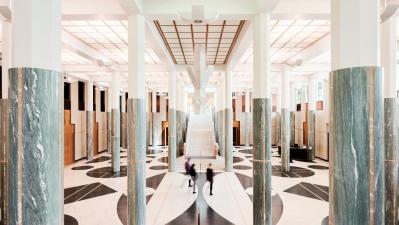
Case Study: Preserving Australian Heritage One Step at a Time
A new skylight needed to be installed directly above the iconic marble staircase. The foyer and staircase are a popular thoroughfare for staff and visitors to Parliament House. Therefore, the installation needed to be completed in a short time frame to minimise disruption.

Case Study: Swift, Sound-Dampening Solution for Optus Office Fitout
Hunter Mason needed a hoarding to protect office areas from dust and noise while undergoing an office fitout for Optus in the 727 Collins Street building. The project included blocking off the expansive building atrium within a short period of one week.
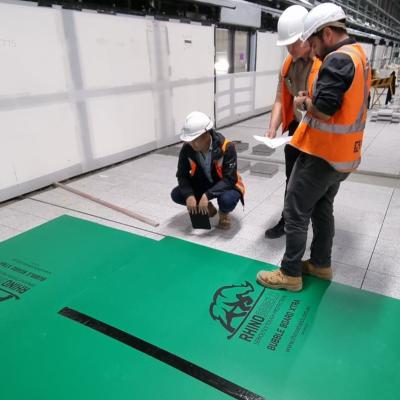
Case Study: Safeguarding Sydney’s Martin Place Metro Station Floors During Fit Out
Nash Group needed an effective and efficient solution to protect the new granite floors throughout the station while fit out works were being completed including the use of elevated work platforms and heavy boom lifts. Nash typically used 17mm plywood for floor protection when it needed to support heavy equipment.